
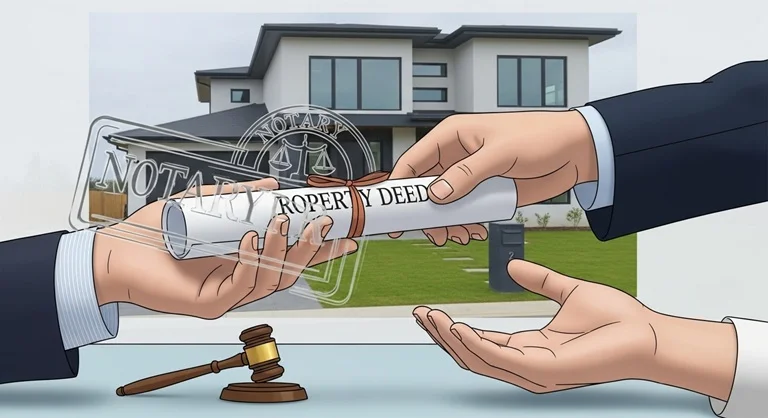
The repercussions of a quit-claim deed often begin with a lack of awareness about its nature. A quit-claim deed is a legal document that transfers whatever ownership interest the grantor has in a property to a grantee. Unlike other deeds, it does not guarantee that the title is free from liens or claims. This absence of warranty means the grantee assumes potential risks, which can lead to legal and financial complications if not properly addressed.
Quit-claim deeds are commonly used in family transfers, divorce settlements, or intra-trust property adjustments. While they simplify the process, the repercussions of a quit claim deed may include inheriting existing debts, disputes with co-owners, or title inconsistencies. Understanding how these deeds work is critical before signing or accepting a transfer. Proper due diligence, including reviewing property history and liens, can help reduce the risks.
The simplicity and low cost of quit-claim deeds make them appealing, but this convenience comes with legal exposure. In essence, the repercussions of a quit-claim deed can be long-lasting if parties fail to investigate property status or neglect legal guidance.
What is a Quit-Claim Deed?
A quit-claim deed is a tool for transferring property ownership without warranties. The grantor conveys whatever interest they hold, if any, to the grantee. While straightforward, the main concern is the repercussions of a quit claim deed, as there is no guarantee that the property is free from liens, mortgages, or ownership disputes.
These deeds are often used for transfers between trusted parties. For example, parents may transfer property to children, or a divorcing spouse may relinquish interest. Despite their common use, the repercussions of a quit-claim deed can include financial liability if outstanding obligations are tied to the property.
Grantees should always conduct a title search before accepting a quit-claim deed. Unlike warranty deeds, which offer legal protection against title defects, quit claim deeds expose the grantee to potential claims. Understanding these risks is essential to mitigate any negative repercussions of a quit-claim deed.
How Does a Quit-Claim Deed Differ from Other Property Transfers?
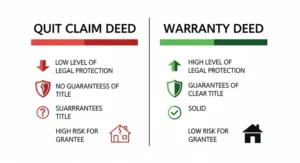
The repercussions of a quit-claim deed differ significantly from other property transfers because of the lack of title assurance. A warranty deed, for example, guarantees that the title is clear and that the grantor has full authority to transfer ownership. A quit claim deed provides no such guarantee, leaving the grantee responsible for any issues.
This difference affects legal risk and potential financial exposure. Using a quit-claim deed without proper investigation can result in inheriting unpaid taxes, existing mortgages, or liens. These are common repercussions of a quit-claim deed that parties often overlook in informal transfers.
Despite its simplicity, a quit-claim deed is best suited for situations where parties trust each other and the property history is well-known. For traditional property sales or transactions requiring financing, a warranty deed is preferable to avoid the repercussions of a quit-claim deed.
Legal Implications of Signing a Quit-Claim Deed
Signing a quit-claim deed has serious legal consequences. The grantor relinquishes any interest in the property immediately, and the transfer is usually irreversible once recorded. The grantee assumes all risks, which can include liens, taxes, or disputes. These are some of the most critical repercussions of a quit-claim deed.
Existing mortgages or obligations remain the responsibility of the original owner unless the lender consents to transfer. Ignoring this can result in financial liability or foreclosure risks. Additionally, improper execution can affect estate plans or cause disputes among heirs, highlighting further repercussions of a quit claim deed.
Consulting a real estate attorney ensures that transfers are legal and protect both parties. Understanding the full scope of these legal implications reduces the likelihood of costly disputes.
What You Need to Know About Quit Claim Deeds
To avoid negative repercussions of a quit-claim deed, grantees should fully understand the process. Quit claim deeds only transfer the grantor’s interest. If the grantor holds a partial interest, the grantee will not receive full ownership automatically, which can lead to shared property disputes.
Title issues are another key concern. The deed does not protect against liens, unpaid taxes, or legal claims. A thorough title search and professional advice are crucial to minimize the repercussions of a quit-claim deed.
Quit-claim deeds are ideal for trusted family transfers or adjustments within trusts. They are not suitable for sales requiring financing, as lenders and insurers typically require warranty deeds. Proper preparation, execution, and recording are necessary to ensure the deed is legally valid and to prevent the repercussions of a quit-claim deed.
The Differences Between Quit Claim and Warranty Deeds
Understanding the differences between a quit claim deed and a warranty deed helps avoid unintended repercussions of a quit claim deed. Warranty deeds provide guarantees that the property is free of claims and that the grantor has clear ownership. Quit-claim deeds lack these protections.
The main risk is that grantees assume responsibility for any liens or disputes. While quit claim deeds are faster and cheaper, they are not recommended for standard property sales or commercial transactions. Ignoring these distinctions can amplify the repercussions of a quit-claim deed and lead to costly legal battles.
Legal Risks Associated with Quit Claim Deeds
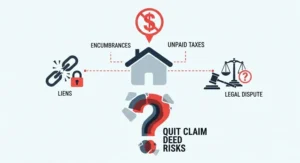
The primary repercussions of a quit claim deed involve legal exposure. Grantees may inherit unpaid taxes, existing liens, or disputes over property ownership. Fraud or misrepresentation by the grantor can also create long-term issues.
Mortgage obligations are another risk. If the property carries a mortgage, transferring it via a quit-claim deed does not relieve the grantor of the debt. Estate and tax complications can also arise, emphasizing why professional guidance is crucial to reduce the repercussions of a quit-claim deed.
When to Use a Quit-Claim Deed in Property Transfers
Quit-claim deeds are best used for family transfers, divorce settlements, intra-trust adjustments, or correcting title errors. These scenarios typically involve trusted parties and minimize the repercussions of a quit-claim deed.
They are not suitable for standard property sales or transactions requiring financing. Lenders and insurers often reject quit claim deeds in favor of warranty deeds to protect against legal and financial risks.
Common Mistakes When Filing a Quit Claim Deed
Mistakes can worsen the repercussions of a quit-claim deed. Common errors include failing to notarize, providing an incorrect property description, or neglecting to record the deed. Assuming the property is free of liens without a title search is another frequent mistake.
Consulting a professional and verifying property history reduces the risk of future disputes and limits the repercussions of a quit claim deed.
How to Properly Execute a Quit-Claim Deed
Proper execution is key to avoiding the negative repercussions of a quit-claim deed. Include an accurate legal property description, full names of grantor and grantee, and notarized signatures. Recording the deed with the county ensures it is legally recognized. Professional guidance ensures compliance with local laws and reduces potential liability.
Understanding the Legal Rights Gained or Lost
Accepting a quit claim deed transfers the grantor’s interest but may expose the grantee to financial or legal claims. The grantor loses all property rights upon recording. Awareness of these factors is essential to understanding the repercussions of a quit-claim deed fully. Due diligence, title verification, and legal consultation help protect both parties.